

What! You went to Nine Mile! A settlement? No!!!!
The contrast between my last trip to PNG and this one is stark. Last time was in 2016 when I was a Senator on a Parliamentary Delegation. All I saw of Port Moresby was my hotel room, the inside of a minibus and meeting rooms in the offices of Very Important People.
This time I travelled around in a battered blue taxi driven by my friend Imel who is the convenor of the PNG Greens Party Youth Wing. It still wasn’t safe for me to go out walking on the streets in Port Moresby by myself they told me, but accompanied by Imel and Freda and others, we went all over the place. Culminating in my last night in Port Moresby when we visited the community at Nine Mile.
Daniel Aiyo Kinimba from Yut Halvilim Yut/ Youth Helping Youth had invited me to visit, to meet the ‘youths and Mamas’. I had met Daniel and some of the ‘youths’ two weeks ago when they had attended a meeting we had called to meet me and introduce people to the PNG Greens. He arrived in a bus with about 20 members of his community and they were excited to hear about the Greens commitment to environment, social justice, peace and non violence and participatory democracy. And transparency, accountability, ethics… in short not being corrupt.
Daniel was keen for me to come and visit the community where he lives and works with young people. I said yes of course. I knew I only had limited time after my mid afternoon flight from Lae back to Port Moresby before flying home today, and I was catching up with people for dinner at 6. But I told Daniel that as long as my flight was on time I was keen to get there.
My flight fortunately was only half an hour late - that’s pretty good going for an Air Nuigini flight. Specially an afternoon one- the number of afternoon flights cancelled or postponed to the following day is pretty extraordinary! Imel picked me up from the airport, I quickly checked in at my hotel and we hotfooted it out of town. I must admit I hadn’t really focussed on exactly where we were going until we turned off the main road to enter the 9 mile settlement.
Immediately the road was a challenge for the battered blue taxi. Think of an Australian forest road that hasn’t been graded in a while, with washouts, potholes, eroded gullies and associated big humps to navigate. Imel wasn’t fazed though - he knew what his car was capable of as we chugged up the hill. We bumped our way up, with walls made of patched up sheets of corrugated iron running alongside us.
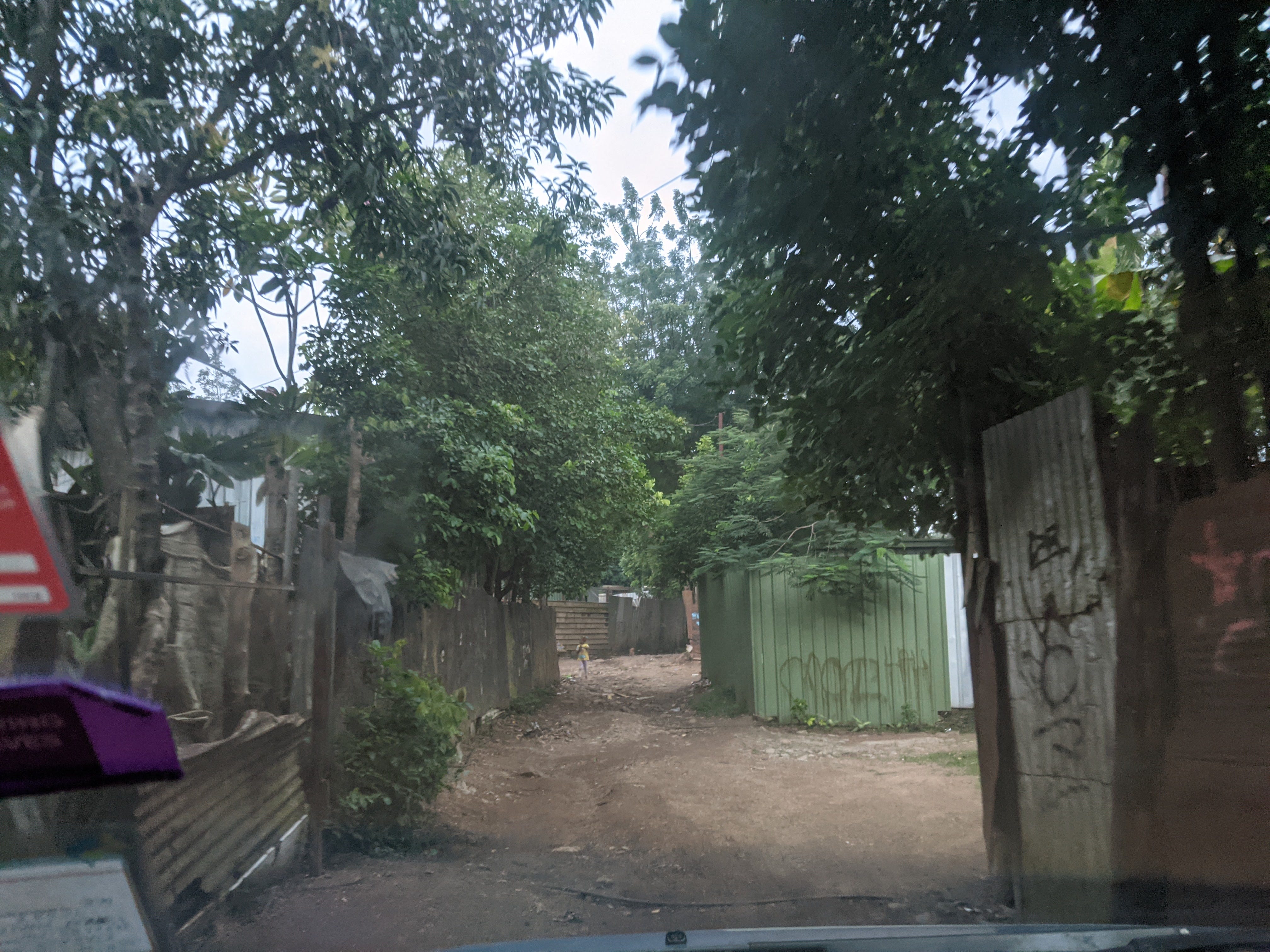
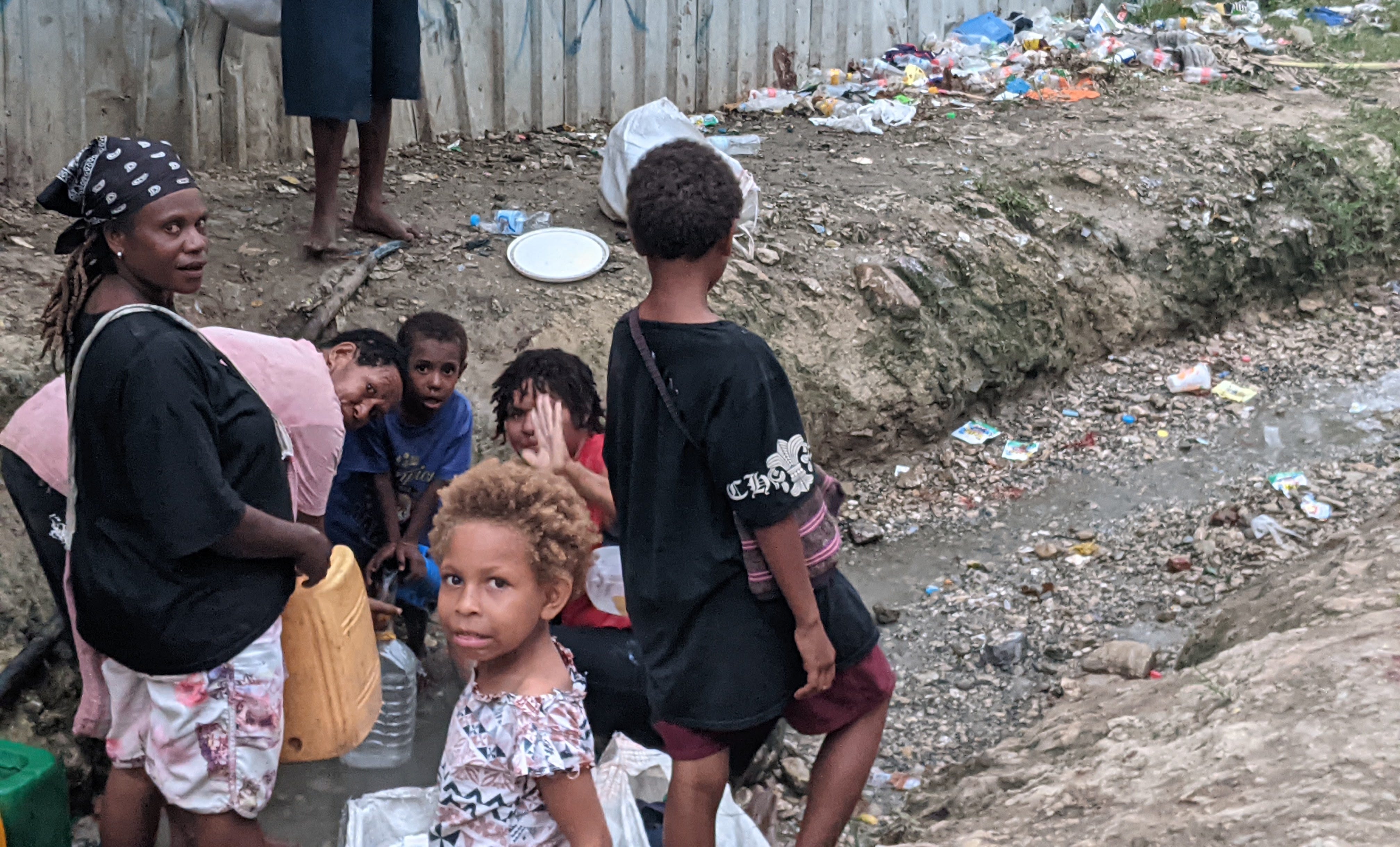
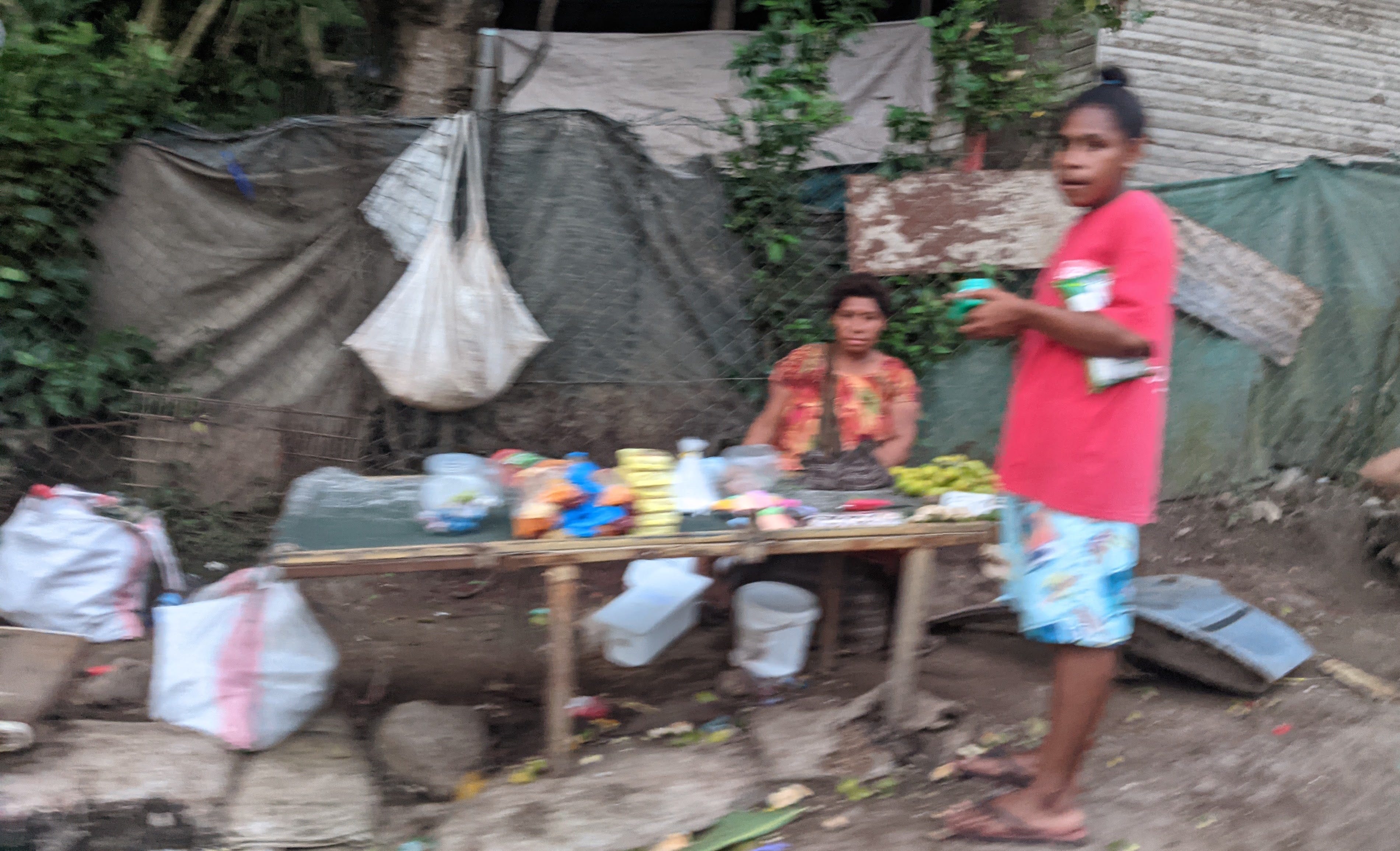
Over the half a kilometre or so we passed a health clinic, a church, a couple of very basic roadside stalls selling betel nut and other essentials, and a group of women and children doing their washing in the drain running alongside the road.
We turned a corner and arrived at the central meeting place for the community - a flat area of compacted sand and rubble, covered in this instance by a very large worn blue tarp - and a group of young people in their kickboxing uniforms, standing in formation, ready to welcome me to their community.
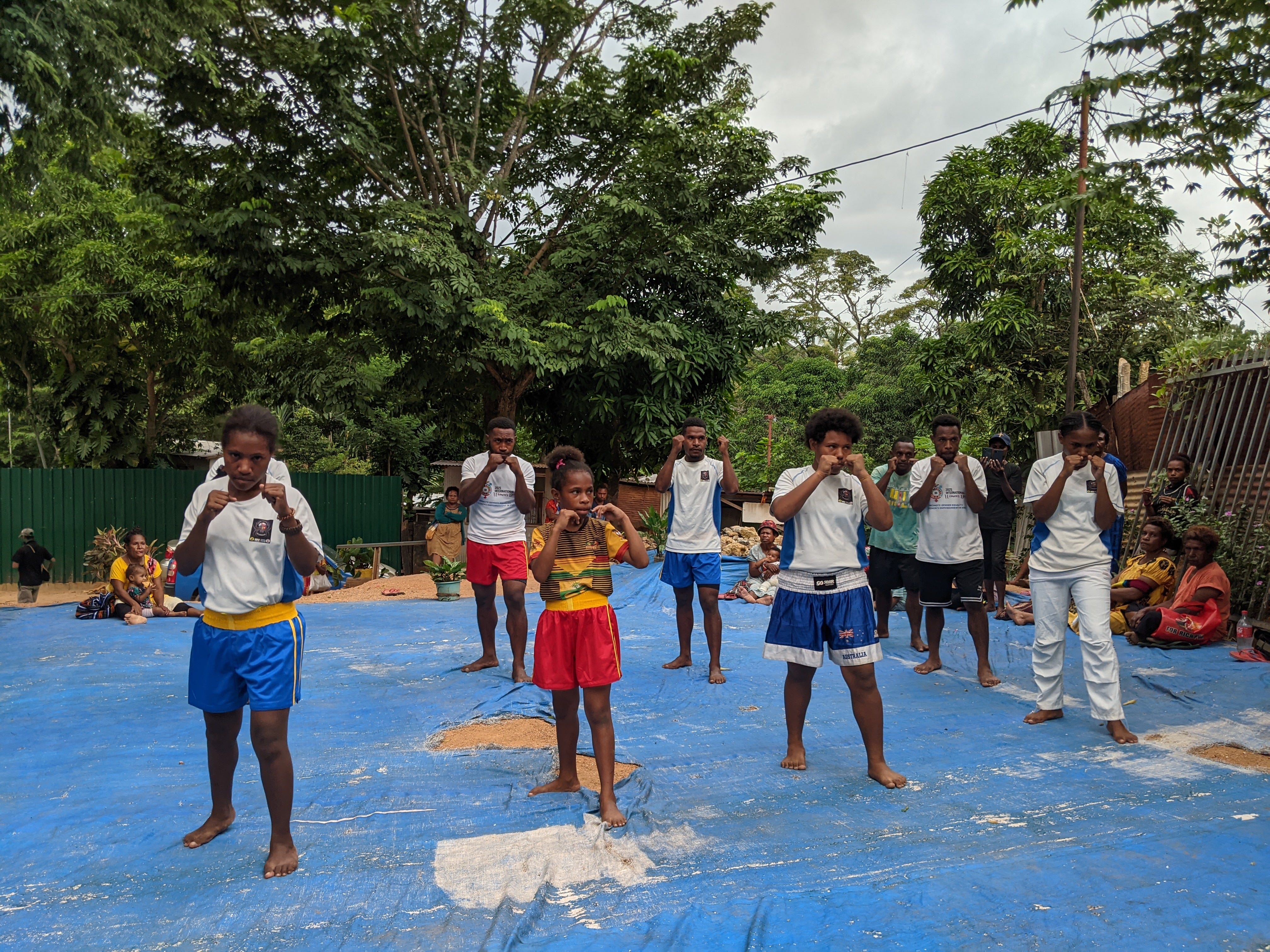
Multiple rounds of applause first though as I arrived - it was clear they were very pleased to see me. Then a presentation from the women to welcome me, of a traditional dress that it was insisted I put on immediately, a beautiful basket woven by a woman from the East Sepik region, a woollen bilum woven in the colours of PNG and a crocheted hat. I was accompanied to my seat and the kickboxing youth gave a short performance to welcome me, then we started, first with a prayer, then onto speeches.
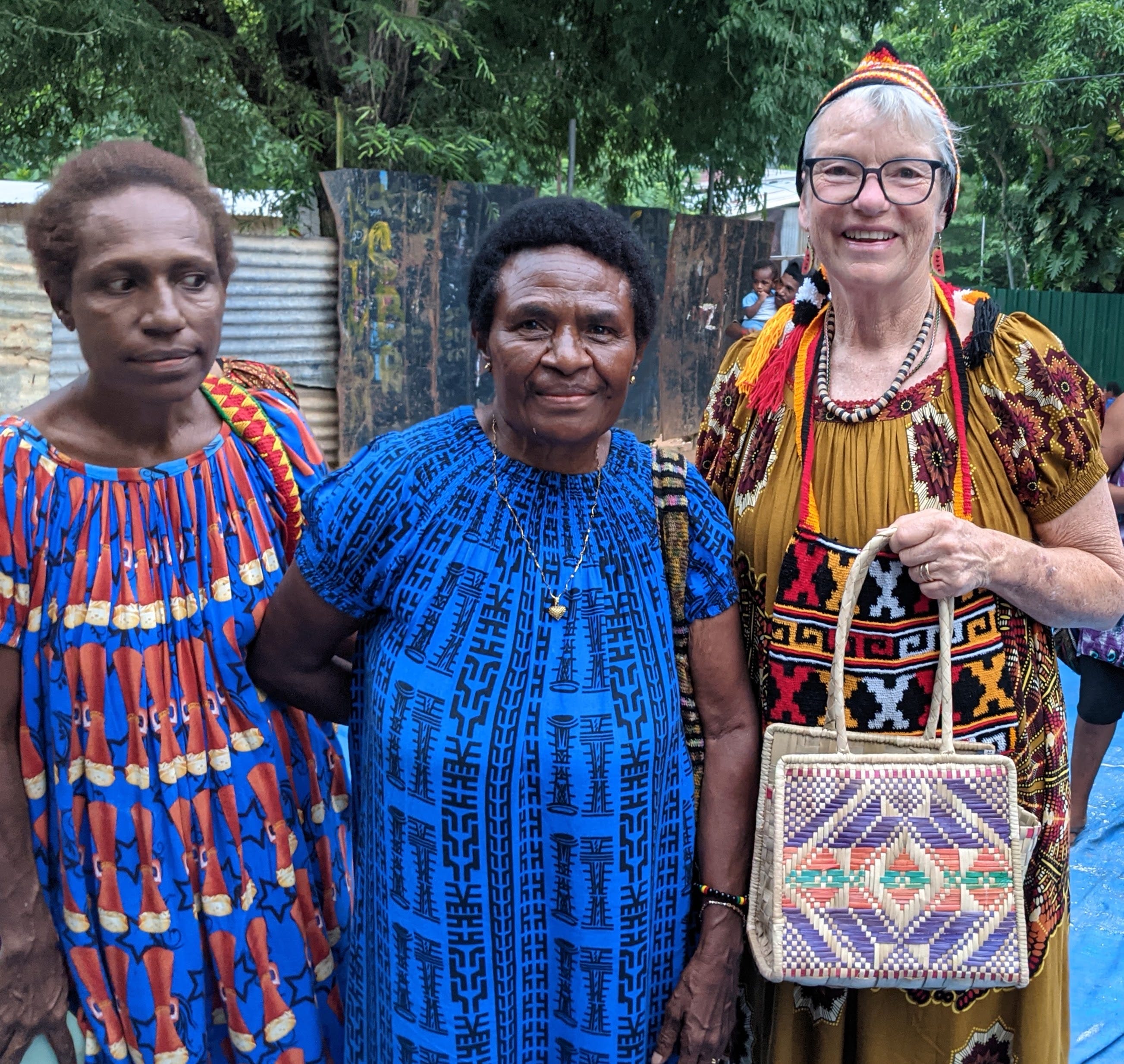
I talked about my background, of Greens values in general but in particular about equality, and everyone having the chance to live a good life, the chance to flourish, with food, housing, education, good health. And while they aren’t being given these opportunities that it affects everyone - that everyone is connected. That their wellbeing is directly connected with mine.
They told me that the people living here came from all over PNG. They were people who had come to Port Moresby in search of work, to build a better life for themselves and their children. I invited people to tell me about what would improve their lives. A ‘southern cross’ was the first thing. Which was quickly explained to me was a large water tank. They don’t have a water supply. Rainfall is captured when it rains, but small tanks and containers run dry between times. Hence the women washing in the drain as we came in, using 20 litre water containers. I didn’t find out about toilets…
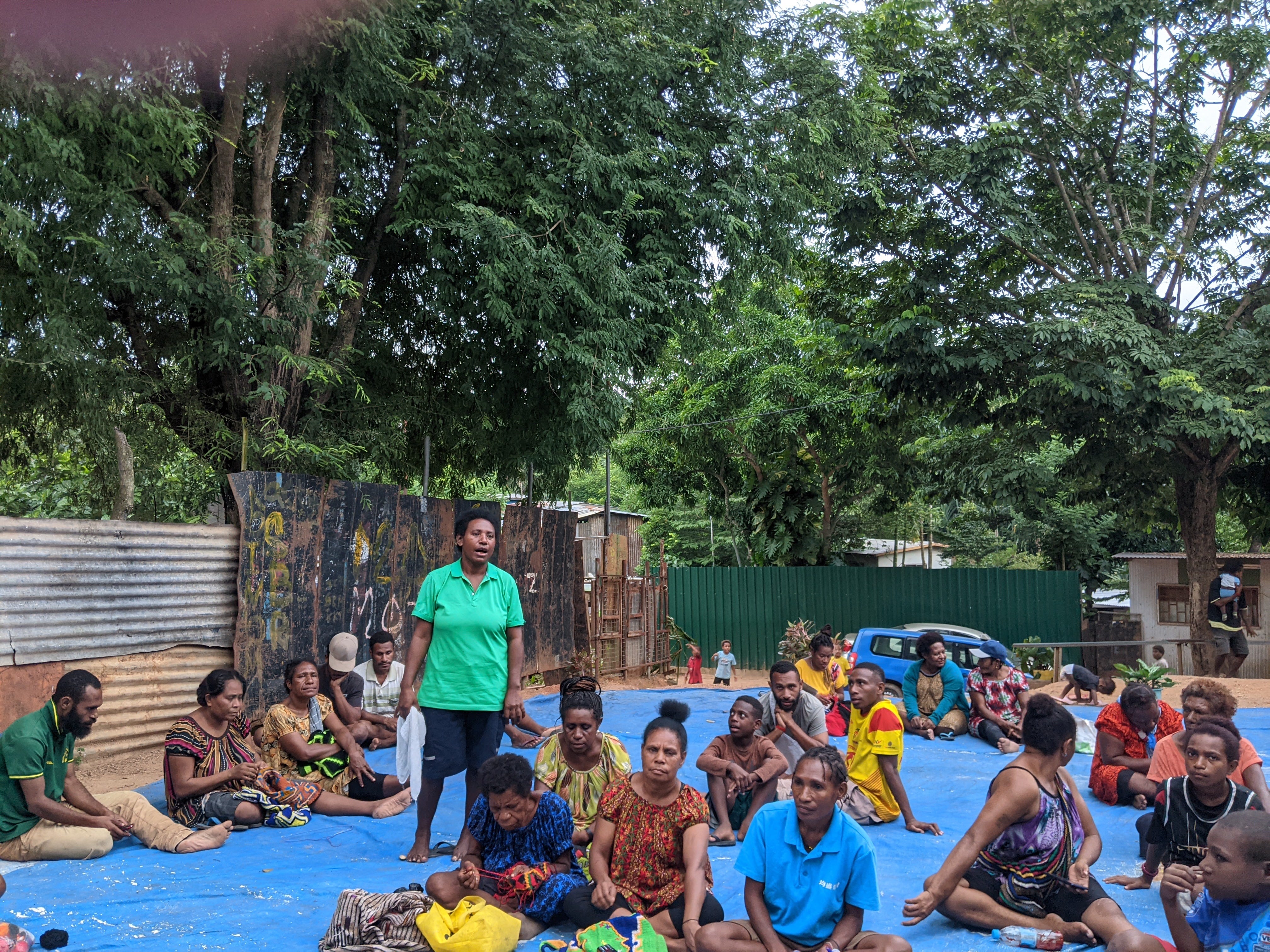
Helen, who was the woman from East Sepik who had presented me with the basket stressed that women wanted opportunities to establish and support SME’s. The jargon SME- small and medium enterprise- is part of the vernacular across PNG where we would say small business or even micro business, such as women selling produce and handcrafts at market stalls. Could I help with ideas or contacts? Could they sell their handcrafts in Australia? I replied that I was sure that they were more of an expert than me about ideas for SMEs but that I would follow up as to whether some very small scale sales of handcrafts could be possible.
More work opportunities in Australia. Expand the PALM scheme which provides work visas for agricultural work in Australia for people from the Pacific.
And support for youth programs in the community to stop young people going bad, taking to drugs and alcohol and crime. Barbara told me that there is a World Bank program that takes young people out of the settlements to get an education - that costs 6000 Kina each ( AU$2400). And then the kids come back and nothing has changed so nothing changes. She said it’s a complete waste of money. In contrast, if there was money to support the programs they are running they would be able to reach many more young people to support them and build life skills, and meaningful engagement in activities and build employment prospects. Lack of employment is the biggest hurdle for them. Two thirds of young people in Port Moresby are unemployed. She said there were around 5000 young people living at Nine Mile, so that’s a lot of young people with nothing to do, who would feel pretty dismal about the prospects for their lives.
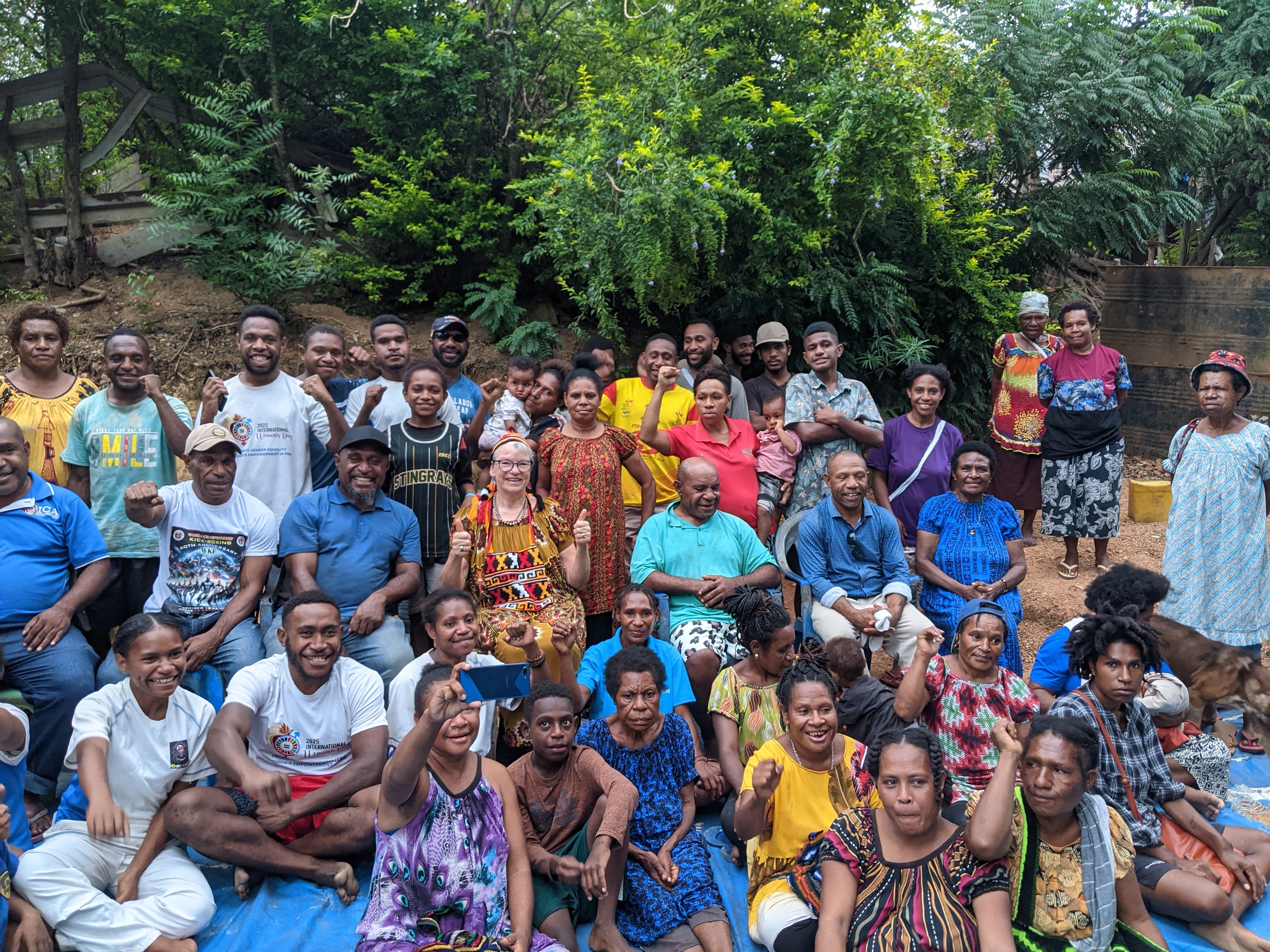
Above all the people of Nine Mile expressed their gratitude that I had come to where they live to listen to them. They said no PNG politician had ever visited them. Let that sink in. I said it was fundamental to the Greens that we listened to the community. And genuinely represented them. That we sought power in parliaments and councils so we could share that power with them. I made sure they all had Imel’s contact details. So many people were keen on the Greens. The local pastor who had introduced the event with a prayer said he was keen on being a Greens candidate at the 2027 election.
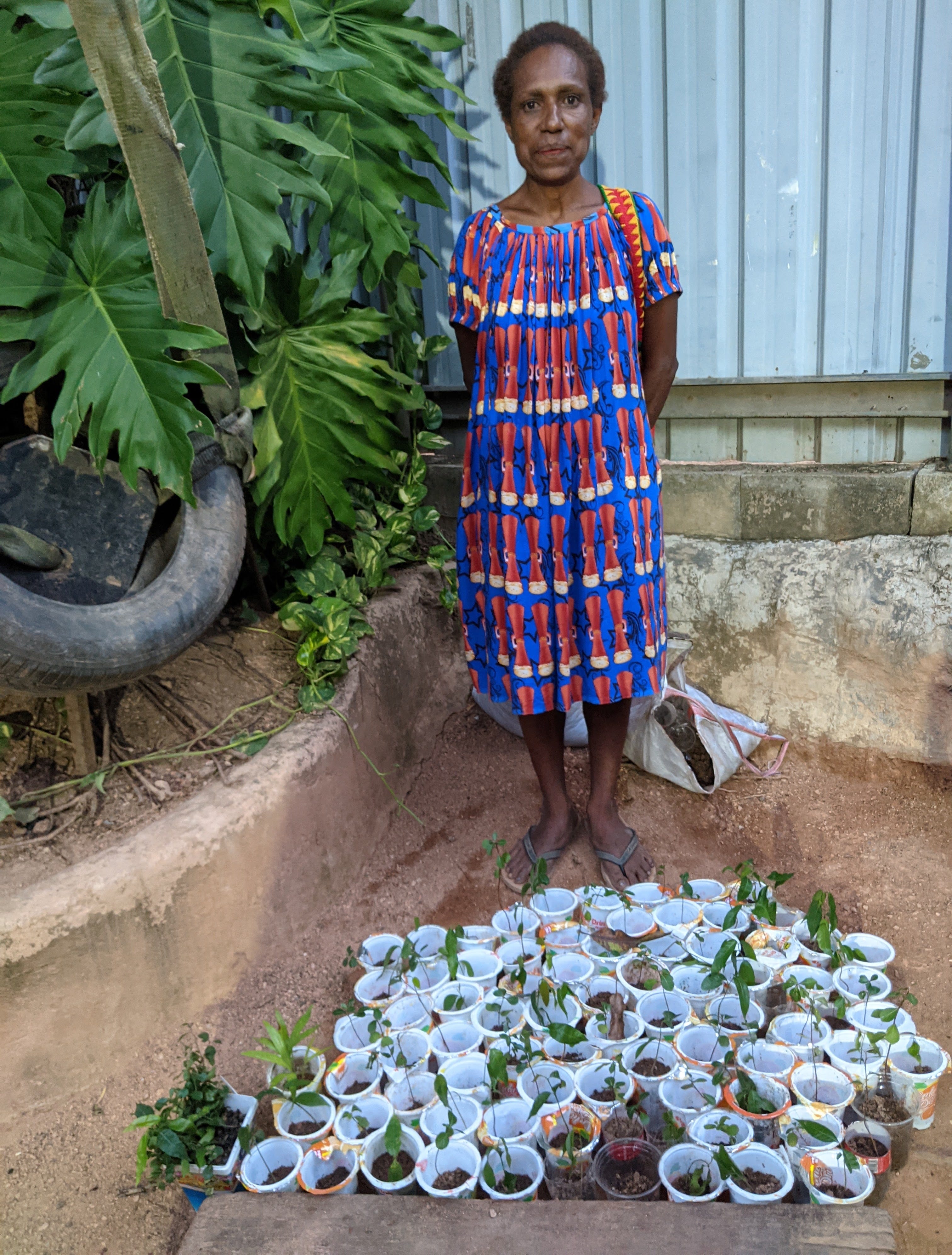
So many photos as we finished up. Everyone wanted to have a photo with me. As we left I was shown their small nursery where they had recently propagated around 100 local trees that they were wanting to use to revegetate a local hillside that had been deforested. Involving the young people in this work of course.
We left on dusk, apologetic that we couldn't stay longer.
I did reflect that if I had sought the advice of the Australian Embassy as to the wisdom of visiting Nine Mile I would have been strongly advised against it. Who knows what might happen in a settlement. The woman I met this morning who had expressed amazement that I had visited was an Australian working on an international aid project. It was forbidden for her to go to such places.
Yet it was the most moving time of my trip. Such generosity, such good work being done there, such struggle against the odds of people helping and supporting others, doing their best to live a good life. I left, feeling worried I’m going to disappoint them, even though I didn’t promise much. The main thing I am leaving them with is a PNG Greens party inspired by my visit, better placed than it was three weeks ago to pull together, to build the party to be a political force that they can be part of, that can represent them.
I am also leaving vowing to find out what can be done to get them a ‘southern cross’. Maybe a community laundry as well. And almost certainly better toilet facilities. And to see whether it might be possible every so often to bring a suitcase full of craft items to sell at Greens forums and functions. What do people reckon?
Daniel Kinimbo has just shared this with me about the water and toilet situation:
The current water situation is that our mothers and children are fetching and carrying water to their homes in Jerry cans from where you have seen, from that roadside pipe. Yes, rain is the main source of water. However, given Port Moresby's savanna environment, rainfall is scarce. We are only lucky when there is rain in October to January and some small pockets of rain in between. A rain catchment system will he a great relief.
The toilet conditions are far worse. Most of us are living on a small piece of land and can only dig one pit toilet. Since the settlements are densely populated, there is not enough space to dig another pit toilet within the piece of land occupied by each settler. Hence, many are forced to use their neighbors toilet or go to the nearest bush or roadside drains.
It is an unfortunate situation.
Thank you for sharing your trip with us.